


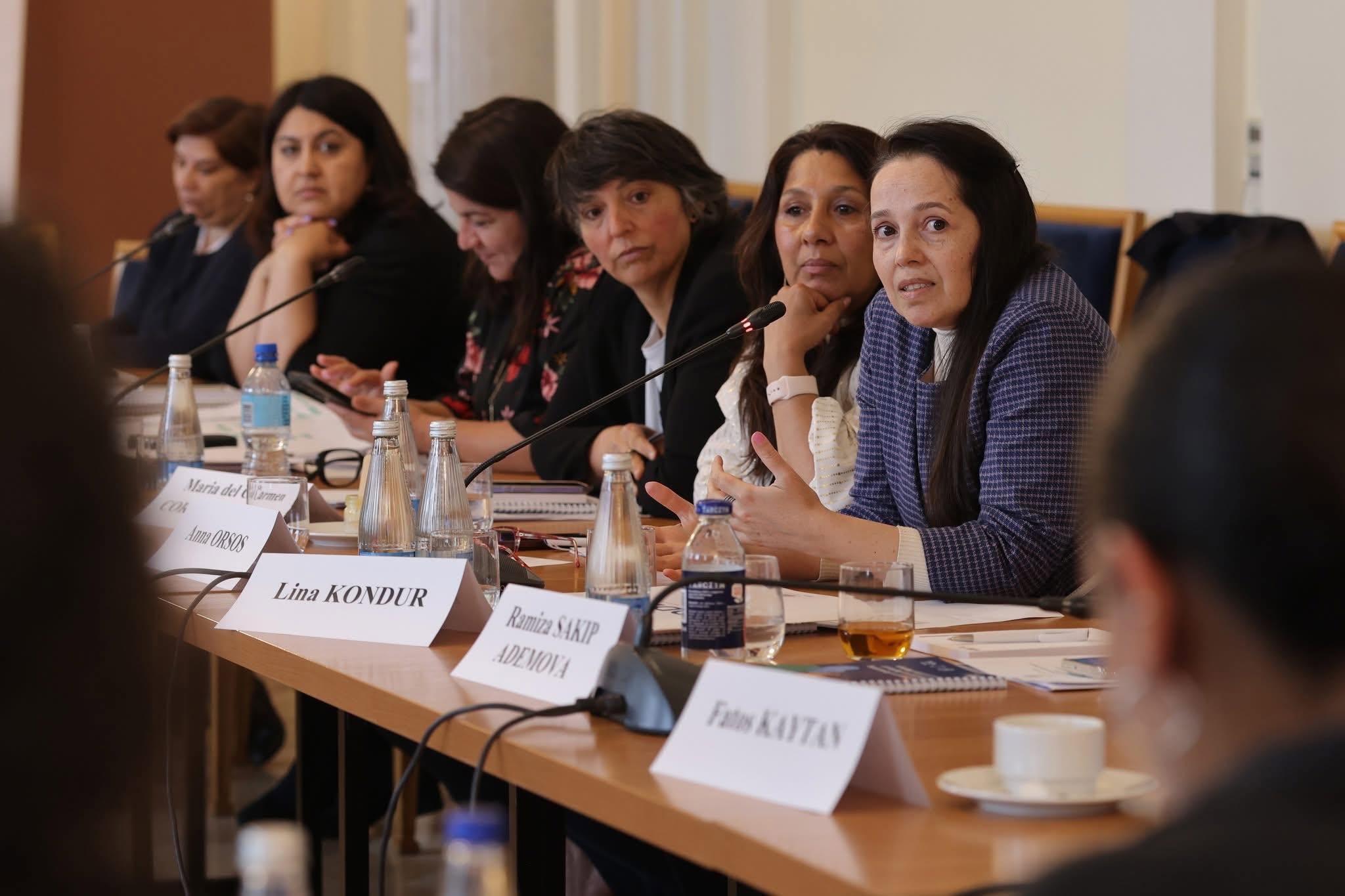
Yesterday in Warsaw, 19 Roma and Sinti human rights defenders from 11 OSCE participating States came together to exchange experiences and explore joint solutions to combat anti-Gypsyism and systemic discrimination.
The seminar was organized by the OSCE Office for Democratic Institutions and Human Rights (ODIHR). Discussions focused on public policy advocacy and the challenges faced by Roma women’s organizations at a time when resources remain limited while the demand for systemic change continues to grow.
Roma Women’s Advocacy as a Priority
A central theme of the seminar was the role of Roma women’s organizations in shaping public policies and advancing human rights. Participants emphasized that the rights and perspectives of Roma women must be recognized as a distinct priority rather than treated as a secondary issue.
“It is important for us that Roma women’s advocacy is increasingly recognized internationally as a priority in its own right, rather than an ‘additional topic.’ At the same time, we see that without stable support, our organizations are often forced into survival mode, which directly affects our ability to influence policies,” representatives of the Roma Women Fund “Chirikli” noted during the event.
Shared Challenges Across Countries
Participants discussed barriers faced by Roma communities in different countries, ranging from symbolic participation without real influence to limited access to decision-making processes and persistent underrepresentation of Roma women in public life.
At the same time, organizations shared successful advocacy practices, examples of cooperation with public institutions, and case studies demonstrating meaningful change achieved at the community level.
The Value of International Networks
A significant part of the discussion focused on strengthening horizontal connections between organizations across Europe. Such networks enable participants not only to exchange knowledge but also to develop coordinated responses to common challenges.
“The greatest value of meetings like this lies in the horizontal connections they create. While challenges may look different on the surface, their roots are often very similar. That is why we need long-term networks of support between countries, not just one-off cooperation,” representatives of Chirikli emphasized.
Strengthening Cross-Border Cooperation
Another important focus of the seminar was the development of stronger cross-border cooperation among Roma women’s initiatives. Participants explored ways to ensure that organizations do not remain isolated within national contexts but instead build sustainable partnerships and mutual support mechanisms across borders.
This work builds on ODIHR’s long-standing commitment to the rights of Roma and Sinti women and takes place ahead of the launch of a new Human Rights Handbook for Roma and Sinti communities.
Advocacy as a Tool for Change
For the Roma Women Fund “Chirikli,” participation in international forums such as this is an important opportunity to strengthen partnerships, exchange expertise, and promote the rights of Roma women at the European level.
The organization remains committed to ensuring that the voices of Roma women are heard and that equality, participation, and non-discrimination remain at the heart of policymaking and social development across Europe.
Photo: Piotr Dziubak
#Chirikli #RomaWomen #Roma #Sinti #Advocacy #HumanRights #Equality #OSCE