


The Roma Women Fund “Chirikli” took part in a meeting of the Expert Council on National Minorities and Indigenous Peoples under the Representative of the Ukrainian Parliament Commissioner for Human Rights. During the meeting, participants reviewed the Ombudsman’s Annual Report for 2025 regarding the protection of national minority rights and discussed the results of regional monitoring across Ukraine.
For Roma communities, it was particularly important that the report highlighted issues that Roma organizations have raised for many years, including spatial segregation of settlements, limited access to administrative, social, and transportation services, and the insufficient inclusion of Roma settlements in local development planning.
From Recommendations to Implementation
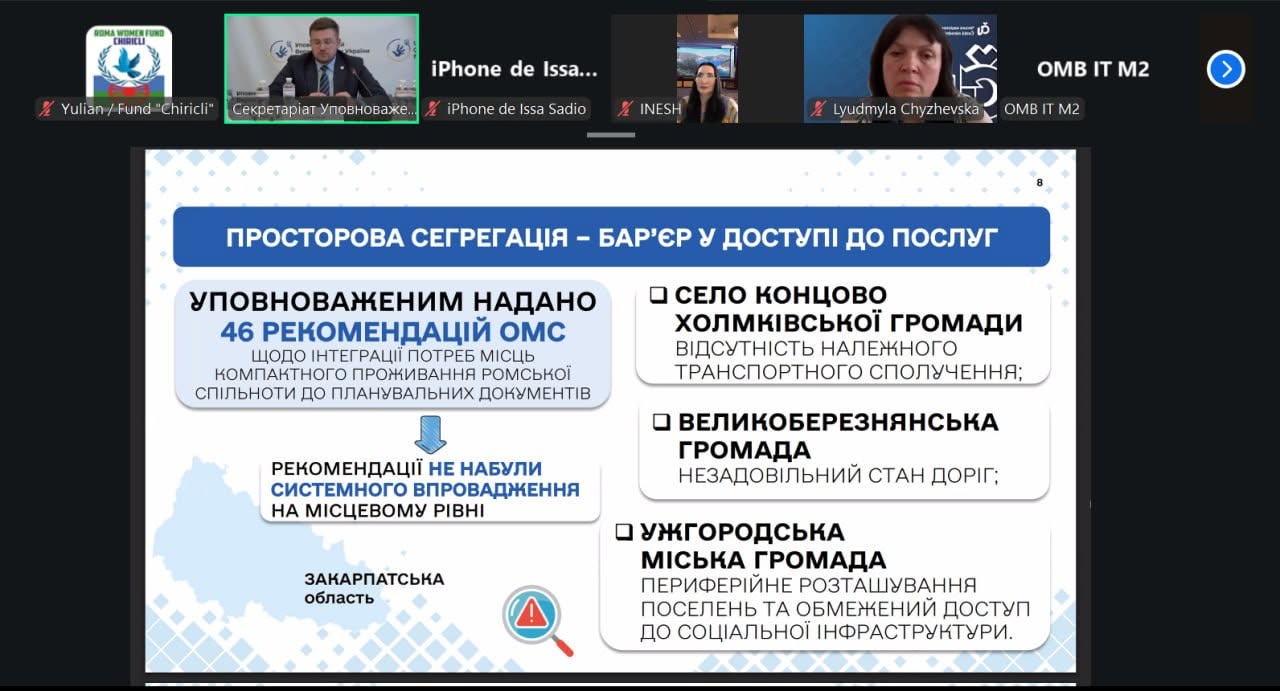
During the presentation, participants noted that the Ombudsman’s Office had issued 46 recommendations to local governments regarding the integration of Roma settlement needs into community planning documents. However, many of these recommendations have yet to be systematically implemented at the local level.
Among the ongoing challenges are inadequate transportation links to Roma settlements, poor road conditions, and the peripheral location of many communities, all of which limit access to education, healthcare, administrative services, and social support.
These findings closely reflect the results of Chirikli’s long-term work in Roma communities and the data collected through its network of Roma mediators across Ukraine.
Strengthening State Policy on Minority Rights
Participants discussed future steps to improve state policy concerning national minorities. One proposal raised during the meeting was the creation of a registry of minority organizations as a mechanism for improving representation and strengthening the protection of minority interests.
The discussion also focused on strengthening state capacity in the field of ethnic policy, including support for existing institutions and consideration of a dedicated body responsible for national minority and indigenous peoples’ issues.
Evidence-Based Decision Making
For Roma communities, effective public policy depends not only on strategies and action plans but also on the capacity of institutions to implement them, coordinate actions across different levels of government, and maintain ongoing dialogue with communities.
Chirikli highlighted the importance of its long-term cooperation with the Ombudsman’s Office in strengthening monitoring mechanisms, documenting rights-related challenges, and building evidence for policymaking.
One result of this cooperation is the Social Atlas of Roma Communities of Ukraine, a tool that helps assess the scale of challenges faced by Roma communities and supports evidence-based policy development. The Atlas confirms that access to identity documents, education, healthcare, social protection, and basic infrastructure remains a pressing issue for many Roma families.
Progress of the Roma Strategy 2030
Special attention was also given to the implementation of Ukraine’s Strategy for Promoting the Rights and Opportunities of Persons Belonging to the Roma National Minority through 2030.
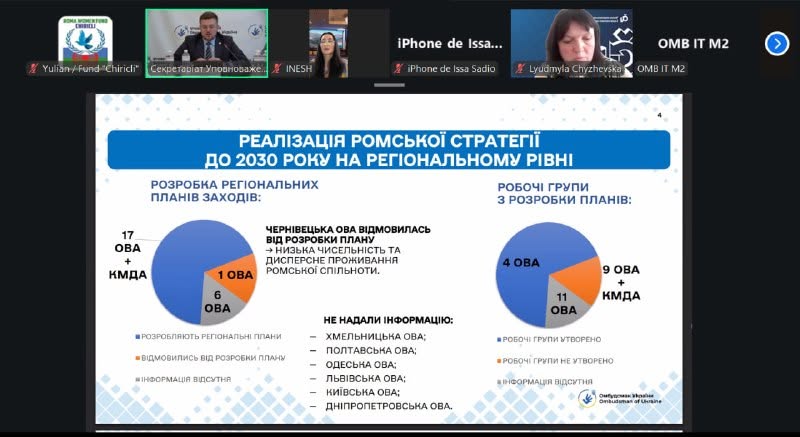
The presented findings demonstrated uneven progress across regions. Only a portion of regional military administrations have developed action plans, while many regions still lack working groups that include representatives of Roma communities.
The Annual Report also highlighted the need to strengthen minority participation in decision-making, establish effective consultative mechanisms at the local level, improve coordination between state institutions and minority organizations, and provide communities with better information about available rights protection mechanisms.
Partnership for Sustainable Change
Chirikli remains convinced that effective policy for Roma communities must be based on reliable data, continuous dialogue, and the direct participation of Roma people in shaping decisions that affect their lives.
The organization expressed its appreciation to the Ombudsman’s Office for its openness to cooperation and willingness to address issues that have often remained overlooked. Sustainable change is possible only through partnership between public institutions, human rights defenders, and the communities themselves.
#Chirikli #HumanRights #RomaInUkraine #Ombudsman #NationalMinorities #RomaRights #SocialAtlas #EqualityWithoutBarriers