


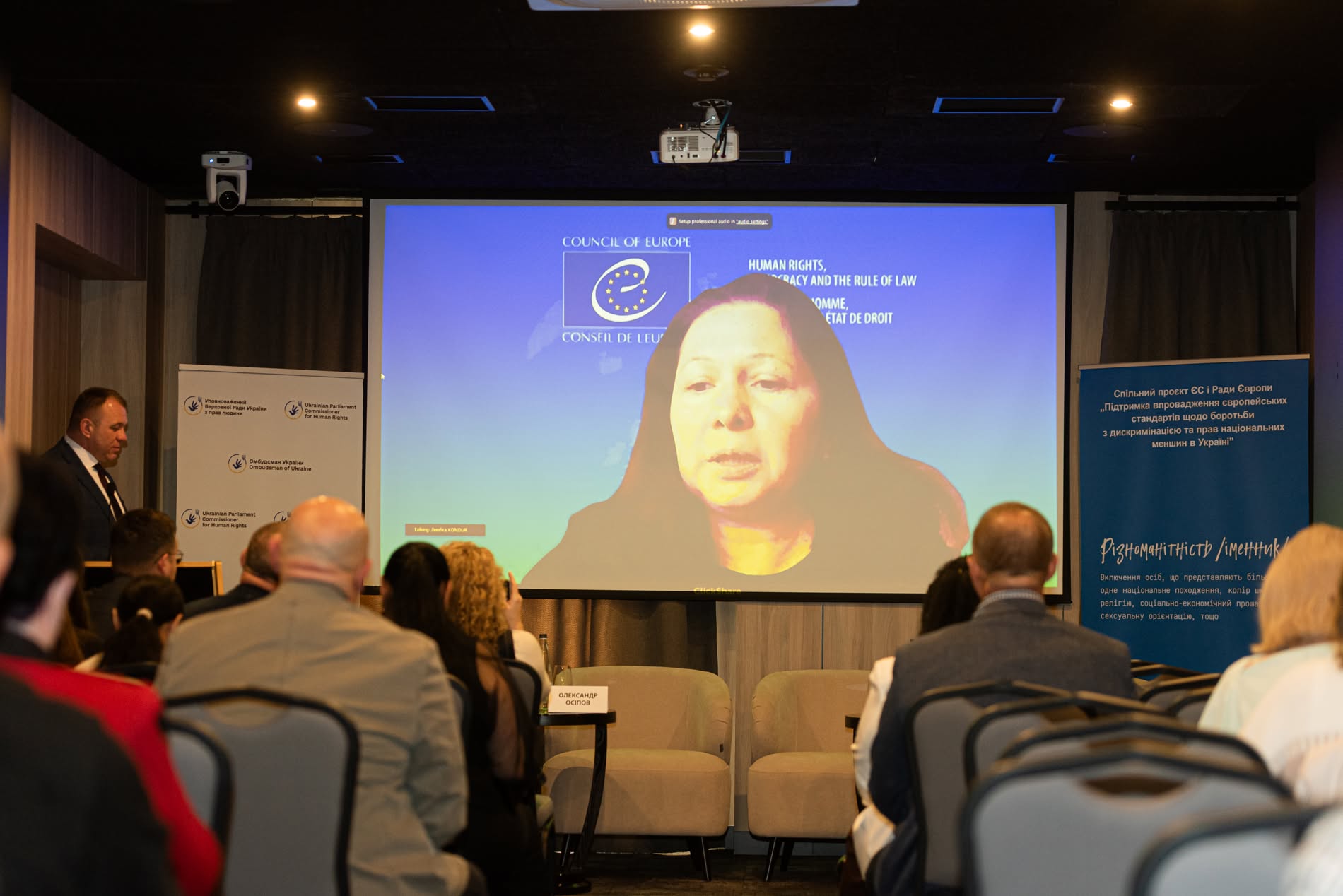
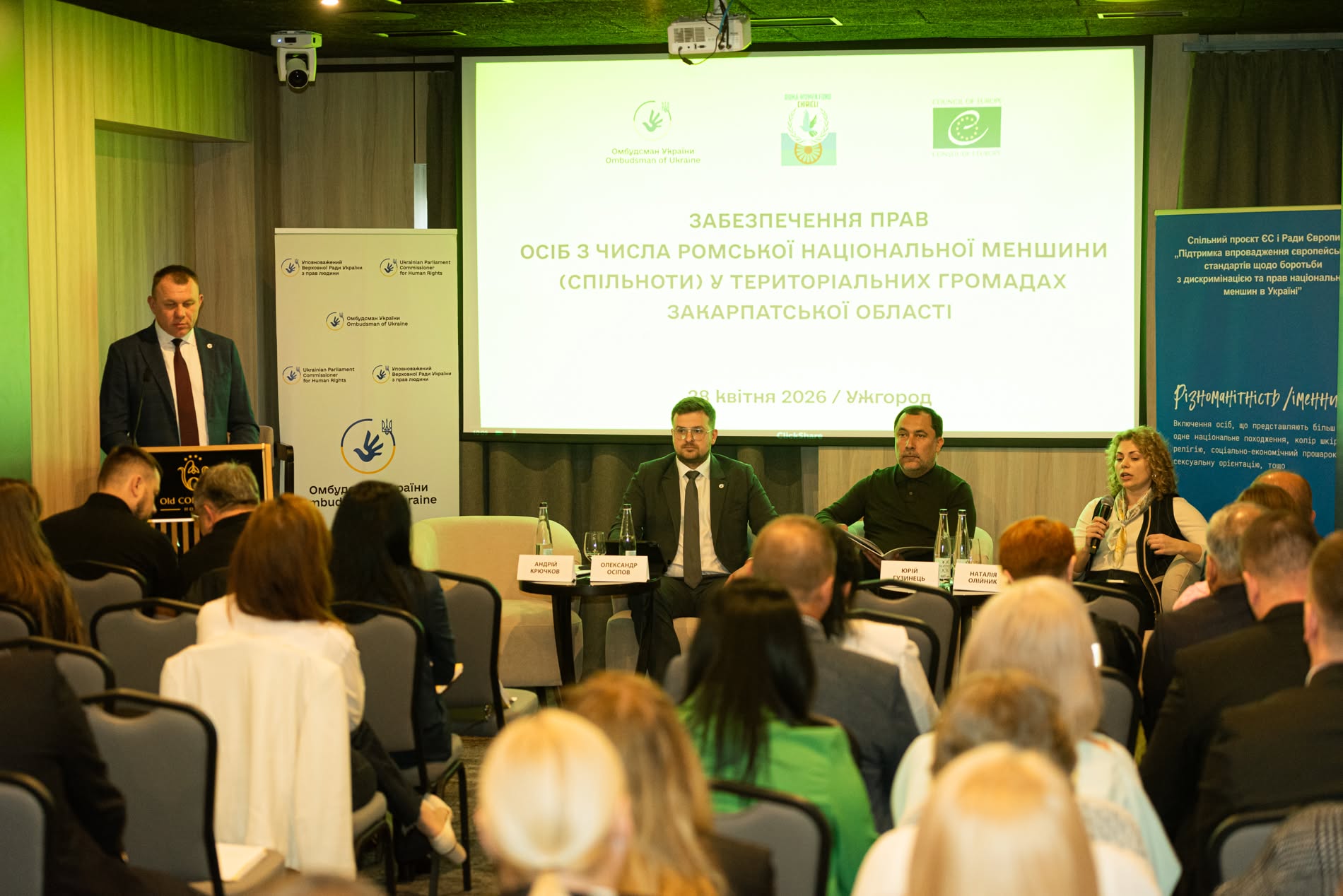
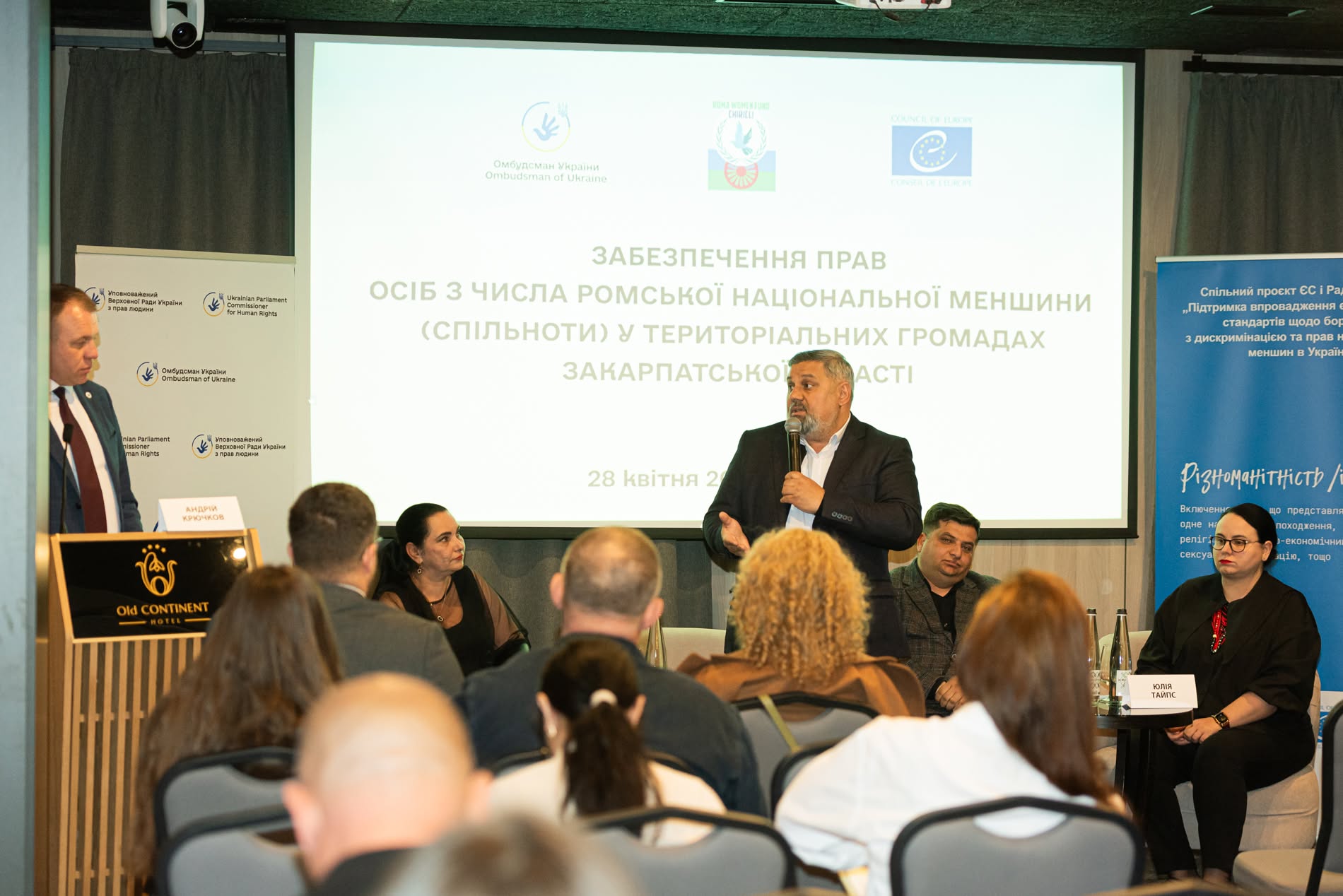
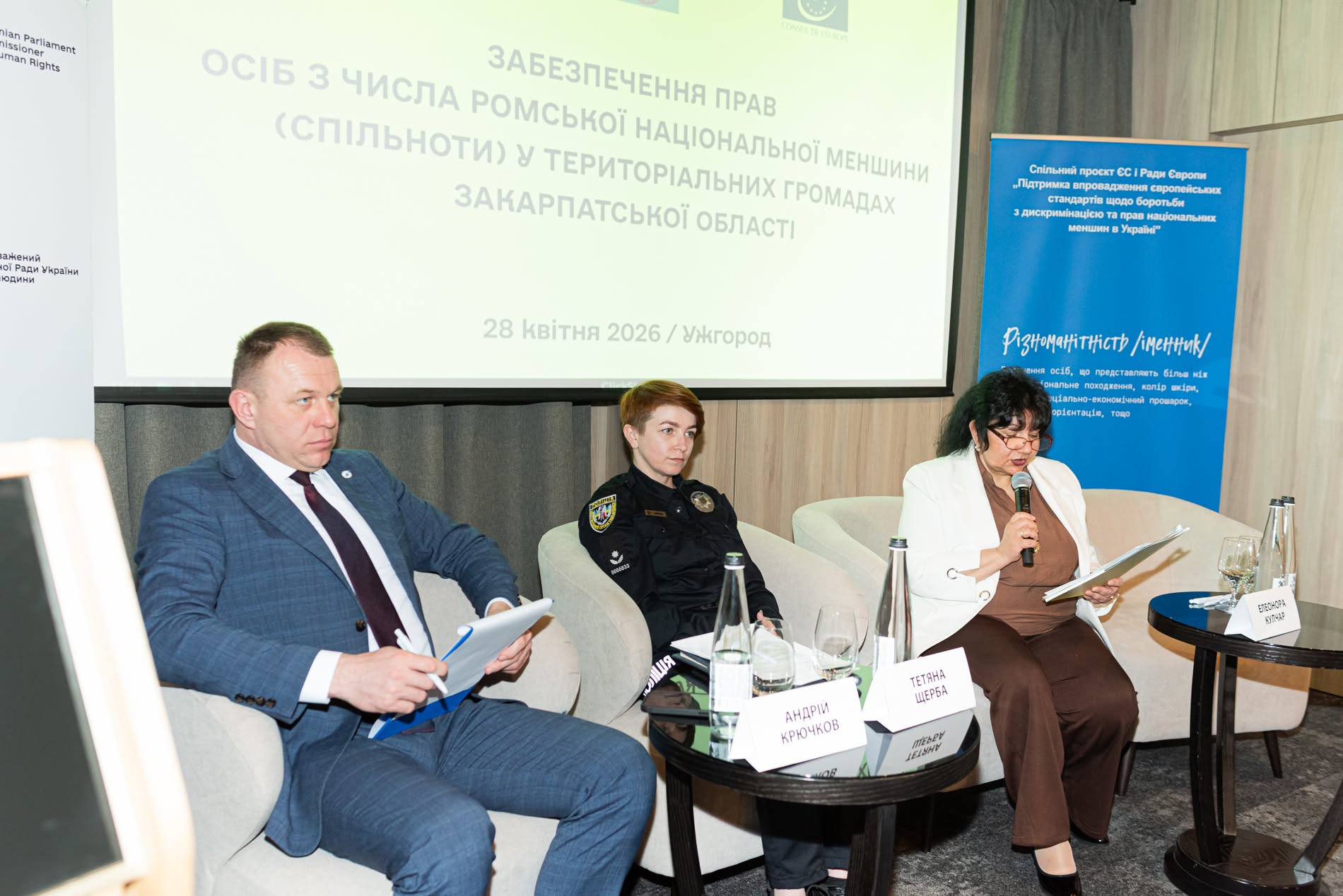
On April 28, a roundtable discussion titled “Ensuring the Rights of Persons Belonging to the Roma National Minority (Community) in the Territorial Communities of Zakarpattia Region” took place in Uzhhorod. The Roma Women Fund “Chirikli” joined the event and presented the results of its monitoring activities and ongoing analytical work on the situation of Roma communities in the region.
The key focus of the presentation was the “Social Atlas of Roma Communities in Zakarpattia” — a practical tool designed to better understand living conditions in Roma communities and support evidence-based decision-making at the local level.



Research Reflecting the Reality of Communities
Last year, the Foundation’s monitoring team conducted a large-scale survey of Roma families living in territorial communities across Zakarpattia Region. The collected data formed the basis for an analytical report and the Social Atlas, which maps access to essential services and infrastructure.
The study covered 10 territorial communities, 530 Roma households, and more than 2,900 individuals. It examined access to water supply, electricity, housing, education, healthcare, and social infrastructure.
Social Atlases as a Policy Tool
Participants discussed the main findings of the research, the challenges faced by Roma communities, and opportunities for cooperation among public authorities, local governments, international partners, and civil society organizations.
It was emphasized that social atlases are included in Ukraine’s Roma Strategy until 2030 as an important tool for evidence-based planning and policymaking at the community level.
Data as the Basis for Effective Decisions
During the event, Chirikli’s Director for Strategic Development, Yulian Kondur, thanked the Foundation’s mediators who carried out fieldwork and collected information directly from Roma households.
He stressed the importance of clear and transparent data collection methodologies, noting that reliable information is essential for setting priorities, designing effective interventions, and evaluating policy outcomes.
Participants agreed that public policy should be based on the real needs of people and verified evidence rather than assumptions or generalized estimates.
Next Steps
The Roma Women Fund “Chirikli” continues to expand the initiative and plans to develop similar social atlases in additional communities across Zakarpattia and Odesa regions.
The goal is to provide communities, public institutions, and partners with reliable data that can support inclusive and effective local policies.
#Chirikli #Zakarpattia #SocialAtlas #HumanRights #Inclusion #Equality #Monitoring #RomaRights #Uzhhorod #CivilSociety